Adding a battery to home solar is worth it when you face regular power cuts, want electricity after sunset or cannot export surplus power at a good rate. If your supply is stable and net metering is available, a grid connected system without a battery often gives better value. The right answer depends on how you use power, not on how good solar sounds.
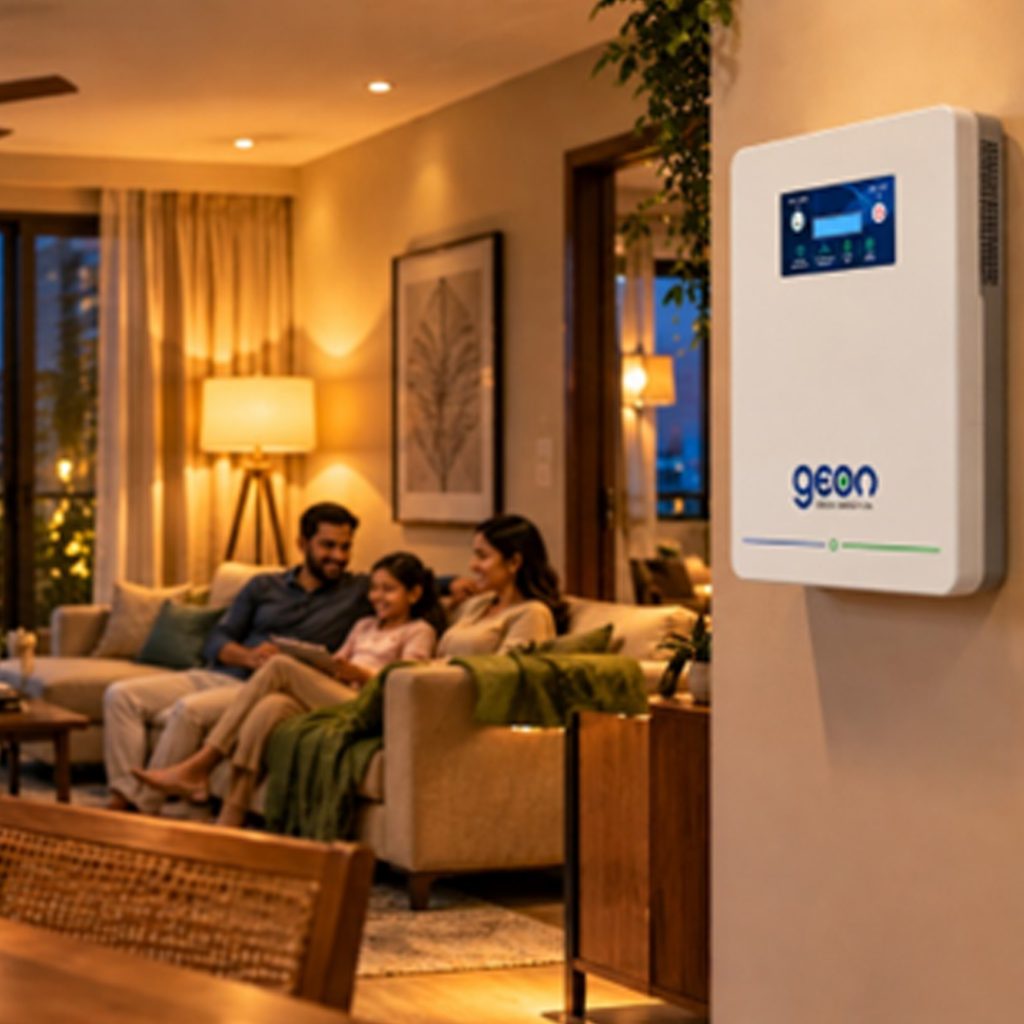
GEON provides home inverter batteries and battery energy storage systems that pair with solar for Indian homes.
Why rooftop solar goes dark with the grid
A standard grid connected solar system is built to switch itself off when the grid fails. This is a safety rule that protects the people repairing the line. So even on a bright afternoon, your panels will not run your home during an outage unless the system also has a battery and the right inverter.
Myth: I have solar panels, so power cuts will not affect me.
Fact: a grid connected system without a battery shuts down in an outage. Backup needs storage and a compatible hybrid or off grid inverter.
Three ways to set up home solar
On grid. Panels plus the utility grid, with no battery. Surplus power goes to the grid where net metering allows. It is the lowest cost option and works well where outages are rare and export is rewarded. It gives no backup in a power cut.
Off grid. Panels charge a battery that runs your home on its own. You get full independence, but it costs more and needs careful sizing. It suits remote homes or places with very unreliable supply.
Hybrid. Panels, battery and grid work together. Solar charges the battery, the battery backs up your home, and the grid fills any gap. You get backup, lower bills and solar power after sunset. A hybrid ready inverter also lets you add the battery later.
The quick self check: do you need a battery?
Answer these in your head.
Do you face power cuts often, or for long hours?
Do you use most of your power in the evening and at night?
Is net metering unavailable, or is the export rate poor?
Do you work from home or run equipment that cannot go down?
If you said yes to two or more, a battery is likely worth it. If you said yes to none, start with a grid connected system and ask for a hybrid ready inverter so you can add storage later. If you are somewhere in the middle, a small battery sized only for essential loads often gives the best balance.
What a battery adds, and what it costs
You gain power during outages for essential loads, solar energy after dark and more of your own solar power used at home.
You pay a meaningful addition to the system price, space and a compatible inverter, and the battery may need replacing before the panels do.
Compare the total cost across the life of the system, not just the first invoice. Check current subsidy scheme terms before you decide, since support is usually tied to the rooftop solar capacity and may not extend to the battery.
Lithium suits daily solar cycling because it lasts longer and needs almost no upkeep. Lead acid can still work for lighter use on a tighter budget.
How to size a solar battery
- List what must keep running. Lights, fans, router, refrigerator. Skip the heavy loads.
- Add up the watts. The label on each appliance shows its rating.
- Decide your hours. How long does a typical outage last where you live?
- Ask your supplier to match it. They will size the battery and inverter together, so you do not overpay or fall short.
Frequently Asked Questions
Do I need a battery with solar panels?
Not always. You need a battery if you want power during outages or solar energy after sunset. If you only want lower bills and have net metering, a grid connected system without a battery can be enough.
Will solar panels work during a power cut without a battery?
Usually not. Standard grid connected systems shut down during an outage for safety reasons. You need a battery and a compatible hybrid or off grid inverter for backup.
What is the difference between on grid, off grid and hybrid solar?
On grid connects to the utility with no battery. Off grid runs on its own battery. Hybrid combines panels, battery and grid in one system.
Is a solar battery worth the extra cost?
It is worth it if outages are frequent, evening use is high or export rates are poor. Where power is reliable and net metering is available, the extra cost may take a long time to recover.
Can I add a battery to my solar system later?
Often yes, but it depends on the inverter. A hybrid ready inverter makes adding a battery later much easier, so ask about this before installing.
How do I decide the right battery size?
List the appliances you want during a power cut, add up their power use and decide how many hours of backup you need. Your supplier can then recommend a matching capacity.
Related reading: What Is an Integrated Inverter
Related reading: What Is a Battery Energy Storage System
Pick storage built around how you live
Solar saves money. A battery adds security and evening power. Let your outages, your tariff and your evening usage decide, not the sales pitch.
Want a recommendation for your home? Call GEON on +91-022-6735 3333, email info@geon-energy.com, or visit us at Fortune Terraces, 10th Floor, B Wing, Opp. Citi Mall, Link Road, Andheri (West), Mumbai 400053.